
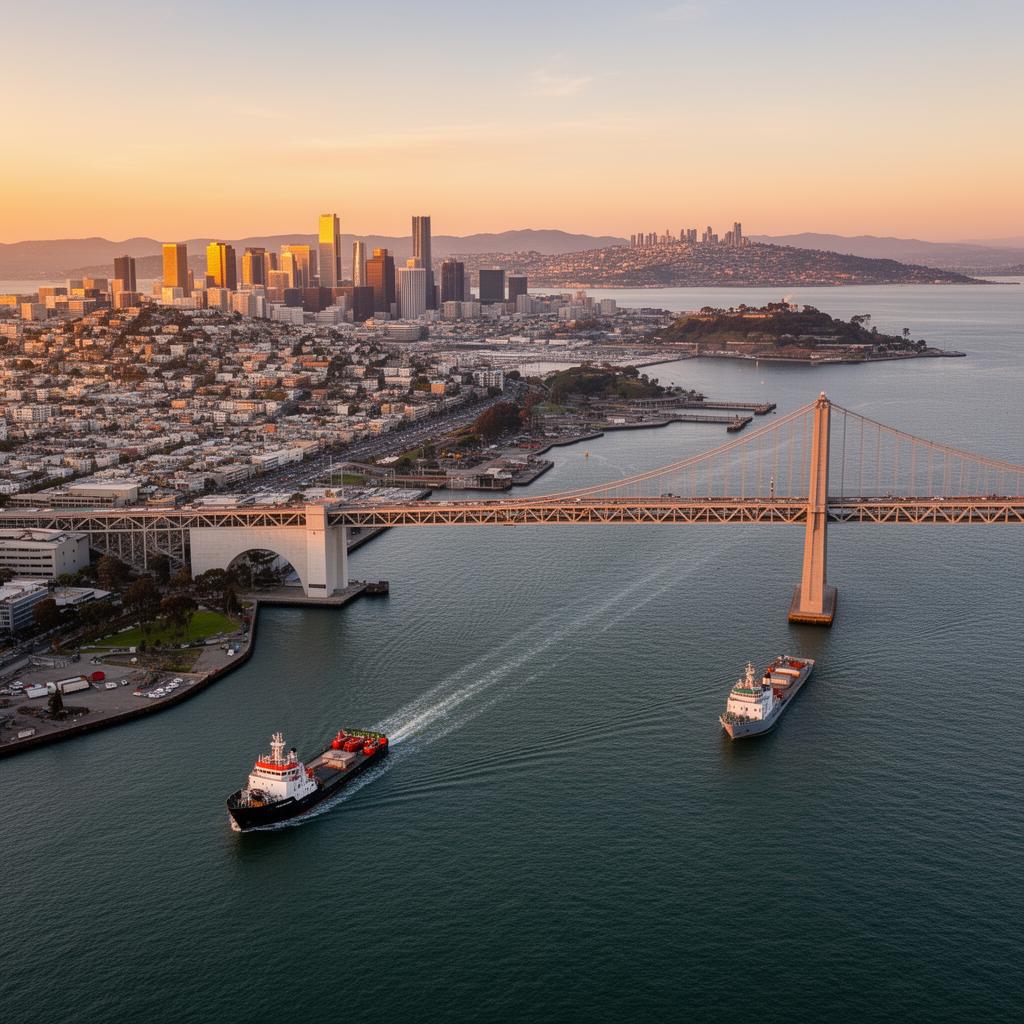
CA-92 breakdowns near San Mateo often involve the San Mateo-Hayward Bridge (J. Arthur Younger Bridge), steep approaches, and summer overheat clusters. Stay safe, coordinate with 511 or CHP, then request light-duty towing or San Mateo towing with direction and mile-marker context.
CA-92 Geography Near San Mateo
State Route 92 links the Peninsula to Alameda County across the San Mateo-Hayward Bridge. Westbound traffic climbs from the US-101 interchange through Foster City toward the high-rise bridge section; eastbound descends toward Hayward.
Common stall zones include the 101 merge, Poplar Avenue connector, bridge toll plaza backups, and the long grade eastbound where cooling systems work hardest in summer heat.
Breakdowns happen on the bridge deck, on elevated approaches, and on surface connectors to Hillsdale and Foster City. Pinpoint whether you are eastbound toward Hayward or westbound toward 101—responders route differently.
CHP Golden Gate Division patrols San Mateo County freeways including CA-92. Bridge incidents may also involve Caltrans maintenance coordination through 511 Freeway Assist.
The J. Arthur Younger Bridge is the elevated high-rise segment most drivers mean when they say San Mateo Bridge. Wind exposure and narrow shoulders make this section higher risk than surface street stops.
Related resources: Service options • Get a quote • Related guide
Breakdown Safety
Hazards on, vehicle as far right as possible, wheels turned away from traffic when parked. If you are in a live lane or cannot reach the shoulder, call 911 immediately.
On the bridge deck, wind and passing traffic noise make it dangerous to stand outside the vehicle. Stay belted inside until CHP confirms it is safe to exit—especially on the high-rise section near Foster City.
Emergency call boxes on the San Mateo Bridge use a green button for voice and a red button for TTY. If operators cannot hear you because of wind, Caltrans may still dispatch based on an active call signal.
Motorcycles should stay uphill of the guardrail when officers clear you to exit—bridge gusts can push lightweight vehicles. High-profile vans and box trucks need extra space for flatbed tilt; mention height when you call.
For cross-bridge safety patterns (Dumbarton, Bay Bridge, etc.), see our Bay Area bridge stall towing guide.
Related resources: Service options • Get a quote • Related guide
511, CHP, and Commercial Dispatch
CHP advises: disabled in traffic lanes or a dangerous location → 911. Otherwise in the Bay Area, dial 511 and say Freeway Assist for roadside help including Freeway Service Patrol during peak commute hours.
511 notes that regional bridges and tunnels are handled through Caltrans—not the same workflow as a standard freeway shoulder. FSP provides free jump-starts, tire changes, and tows to CHP-approved drop spots during designated hours.
Outside FSP windows, CHP's rotational tow program may apply at standard rates, or you can contact a commercial dispatcher directly. Share eastbound vs westbound, last exit or mile marker, and whether the fault is overheat, tire, collision, or electrical.
Peninsula hub: 650-881-2400 for live commercial dispatch. Mention EV/AWD—flatbed-first is common on 92 even without crash damage.
If you already spoke with CHP on scene, share the officer's incident number when you call dispatch—it speeds authorization for hookup at a safe staging point.
Compare FSP vs paid tow workflows in our 511 Freeway Assist vs tow truck guide.
Maximize shoulder space
Pull as far right as possible; wheels turned away from traffic when parked.
Call 911 or 511
Blocking lanes → 911. Otherwise 511 Freeway Assist for bridge/tunnel coordination.
Coordinate with CHP
Officer direction governs when tow trucks approach the bridge deck.
Commercial dispatch briefing
Direction, mile marker, fault type, flatbed need, and destination shop hours—650-881-2400.
Related resources: Service options • Get a quote • Related guide
Bridge vs Surface Staging
CHP or Caltrans may move your vehicle off the bridge deck before authorizing commercial hookup. Confirm who authorizes the tow and whether you are at a rotational drop lot or still on shoulder.
FSP tows free only to designated safe locations—not your home address or repair shop. Plan a second commercial leg from the drop spot to your destination.
Surface street breakdowns near the 101 interchange follow different staging than bridge deck stalls—more shoulder room but heavier merge traffic. Share whether you are past the toll plaza.
Keep destination shop hours handy—weekend bridge backups can delay arrival. Communicate shop closing time when you call dispatch.
Insurance may ask for CHP incident numbers and tow receipts showing hook location versus drop location. Photograph the scene when safe before the vehicle is moved.
If your vehicle was impounded from a CA-92 shoulder after an arrest or 30-day hold, release paperwork is separate from breakdown towing—see our San Mateo County vehicle release guide for sheriff paths.
For US-101 Peninsula parallels (merge pockets, express lanes), see our US-101 Peninsula freeway breakdown guide.
Dispatch facts
- EB or WB toward 101/Hayward
- Mile marker or high-rise landmark
- Overheat vs collision
- EV tow mode status
Risky moves
- Partial lane block without 911
- Wheel-lift on AWD
- Opening hood in live lanes
Related resources: Service options • Get a quote • Related guide
Bridge Approach Staging
Westbound climbs toward the J. Arthur Younger Bridge high-rise section leave minimal shoulder—use hazard lights and stay belted until CHP confirms it is safe to exit.
Eastbound grades from the 101 interchange through Foster City are common overheat zones in summer; share whether coolant loss or electrical fault caused the stall.
511 Freeway Assist routes bridge incidents through Caltrans. FSP relocates to CHP-approved safe spots during peak commute hours—not your home shop.
Commercial dispatch from a rotational drop lot requires your drop address, destination shop hours, and whether flatbed is needed for AWD/EV.
Motorcycles and high-profile vans feel bridge crosswinds more than sedans—mention vehicle type so dispatch sends appropriate equipment.
Weekend beach traffic can back up toll plazas; a stall in stop-and-go heat is different from a moving-lane failure. Describe whether traffic is flowing past you.
Rideshare and delivery drivers stopping on 92 should share app trip context only after scene safety is handled—dispatch needs location facts first, not passenger details.
- State bridge direction (toward 101 or Hayward)
- Note steam or fluid under vehicle
- CHP or Caltrans incident number if officer responded
- FSP drop lot address if applicable
Related resources: Service options • Get a quote • Related guide