
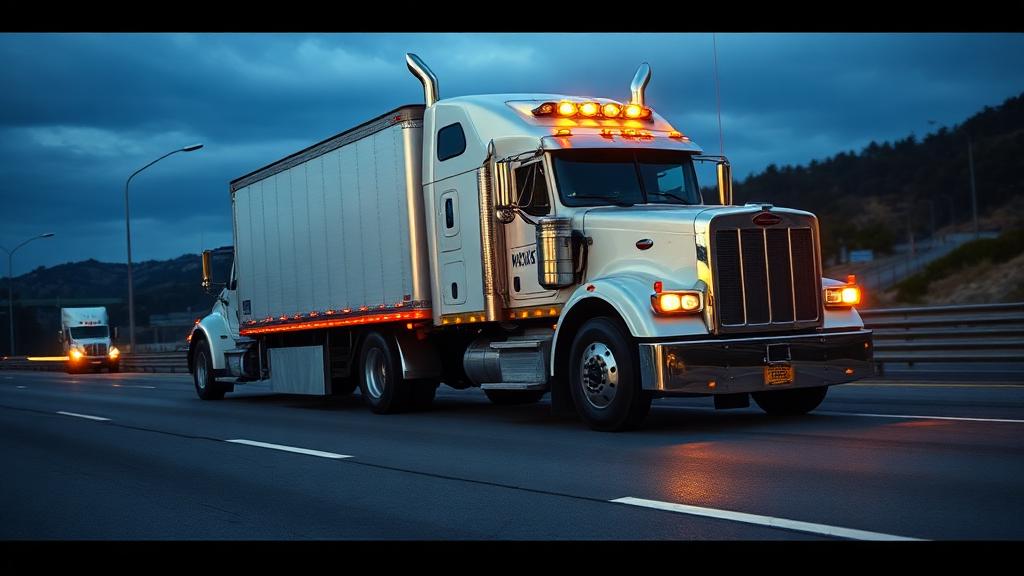
Commercial tire events are kinetic before they are mechanical. Start with the survival rhythm from our semi-truck highway breakdown guide, then layer towing specifics.
Steer vs Drive Failures
Steer events yank the wheel—smooth inputs matter more than speed reduction alone. For passenger parallels, still read freeway towing Bay Area for staging vocabulary.
Photograph tread separation if safe—it helps maintenance identify defect vs wear.
Related resources: Service options • Get a quote • Related guide
Debris Fields and Officer Control
CHP may need a rolling closure before debris cleanup—expect standby lines on invoices when directed.
Mark tire carcass locations for cleanup crews to reduce follow-up punctures.
Related resources: Service options • Get a quote • Related guide
Wrecker Class and Uptime Math
If tandem axles or loaded GCWR push past medium limits, book heavy-duty towing immediately to avoid a stranded first truck.
Tell dispatch if trailer brakes are dragging after a blowout—heat changes hook plans.
Confirm situation
Share your exact location, vehicle status, and destination details with dispatch.
Choose safe method
Request the towing method that matches your vehicle type and current condition.
Document service
Save invoices, timestamps, and photos for claims, compliance, or reimbursement.
Related resources: Service options • Get a quote • Related guide
Closing the Loop with Fleet Maintenance
Pair every blowout invoice with PSI logs and retorque records. For broader programs, revisit fleet management towing.
If OOS risk appears at the next inspection, route to shop before another long pull.
Do This
- Share complete vehicle details
- Ask for itemized billing
- Confirm destination before loading
Avoid This
- Accepting unclear pricing
- Skipping method confirmation
- Leaving without records
Related resources: Service options • Get a quote • Related guide