Commercial towing at Redwood City Seaport requires port-aware dispatch—not a generic street pickup. The Port of Redwood City at 675 Seaport Blvd is the only deep-water port in the South San Francisco Bay. Gather gate contacts and GVWR, then call medium-duty towing or Redwood City towing at 650-881-2400.
Seaport Industrial Context
Port of Redwood City spans roughly 120 acres of industrial waterfront on Seaport Boulevard with direct US-101 and Union Pacific rail access. Five wharves handle bulk, liquid, and project cargo—tenants include Cemex and Sims Metal among maritime operators under Port Tariff 8.
Gate credentials, escort rules, TWIC requirements, and high-visibility PPE may apply inside secured wharf zones. Confirm with port security or your tenant contact before dispatch arrives—unauthorized trucks can be turned away at the gate.
Distinguish port-secured property from public Seaport Blvd frontage. A box truck disabled at a tenant loading dock needs the facility name; a unit on the public shoulder near the 101 connector needs direction and mile marker context.
Woodside Road, Veterans Boulevard, and industrial parcels east of 101 feed warehouse traffic into the same corridor—traffic backups during shift changes can delay escort availability.
Harbormaster and port operations coordinate vessel schedules—peak berth activity can restrict staging lanes near wharf gates; ask your tenant contact about current traffic holds.
Urban commercial recovery patterns overlap—see our commercial vehicle urban recovery guide for tight-lot staging parallels.
Related resources: Service options • Get a quote • Related guide
Medium and Heavy Considerations
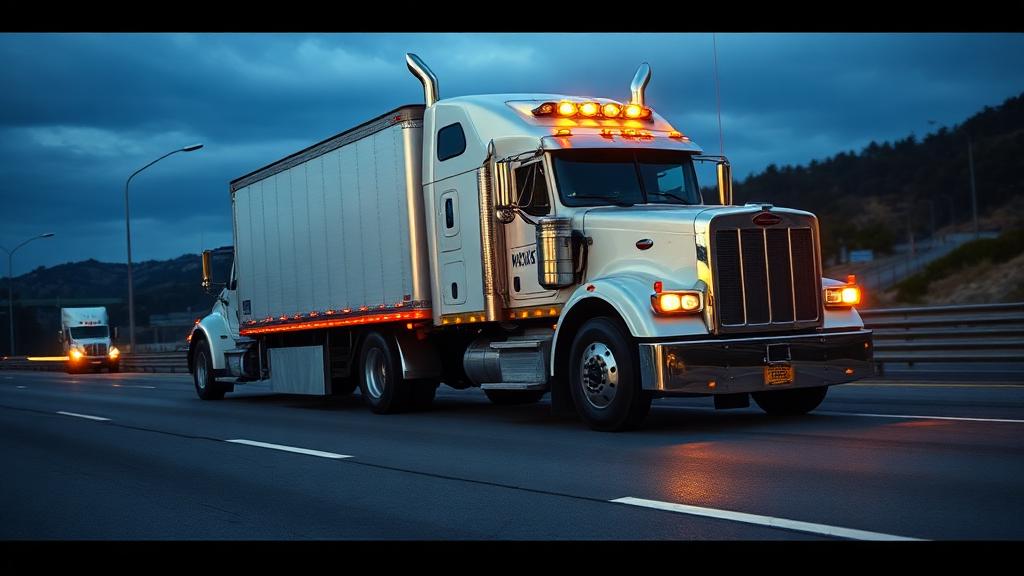
Class 3–6 box trucks, Sprinter fleets, and empty single-axle units often route medium-duty. Loaded tandem dump trucks, cement mixers, and roll-offs with material on board may need heavy-duty wreckers—state axle configuration and approximate load weight.
Forklifts or compact equipment on trailers add tongue weight and height—describe loaded equipment before hookup to avoid undersized rollbacks.
Fluid leaks on port property can trigger environmental hold—note whether oil, hydraulic fluid, or bulk liquid is actively spreading and whether operations paused nearby equipment.
Low-clearance warehouse docks along the corridor may limit rollback angle—share ceiling height or dock level if recovery must happen inside a bay.
Construction and roll-off specifics are covered in our dump truck and roll-off recovery guide.
Related resources: Service options • Get a quote • Related guide
Commercial Dispatch Checklist
Company name, fleet unit number, and driver mobile. GVWR from door sticker, cargo description, and whether trailer is attached.
Location: 675 Seaport Blvd tenant name, wharf number, or public cross street. Gate contact name and phone; after-hours lockbox or escort ETA if applicable.
Hazmat placards, refrigeration running, and whether CHP or port operations already aware. Billing PO or fleet account number.
Rolling status: steerable? Brake lock? Soft ground near bulk piles? Winch recovery may precede highway tow—describe surface conditions honestly.
Peninsula dispatch: 650-881-2400. For US-101 shoulder events near Seaport exits, add northbound vs southbound and last overhead sign text.
Freeway breakdown sequencing on 101 is detailed in our US-101 Peninsula freeway breakdown guide.
Confirm access
Gate codes, guard phones, TWIC needs for port interiors.
Size the job
GVWR, cargo, and whether winch-out is needed on soft ground.
Stage safely
Cones and spotter if forklifts are active nearby.
Related resources: Service options • Get a quote • Related guide
Documentation
Photos of hook location, gate pass if issued, and damage for OSHA or insurance investigations. Timestamp entries help when port security and fleet AP both need records.
CMV context (GVWR over 10,001 pounds per FMCSA) may matter for driver hours and DOT paperwork—note if the event followed an inspection or out-of-service order.
Itemized invoices separating port access standby, escort wait time, hook mileage, and tow mileage speed fleet AP approval.
Environmental incidents may need separate spill reports—keep dispatch updated if port operations requests a hold on vehicle movement.
Union Pacific rail crossings near port entries can delay escort timing—note if a train is blocking Seaport Blvd access when you call.
Commercial brief
- GVWR and axles
- Gate contact
- Loaded status
- Destination yard
Avoid
- Sending light rollback
- No gate clearance
- Ignoring soft shoulder
Related resources: Service options • Get a quote • Related guide
Port Access and Credentials
Some terminals require TWIC or escort for non-port vehicles—confirm whether your breakdown is inside a secured gate before dispatch sends a truck.
Seaport Blvd connects marine industrial sites to 101—state cross streets and business names; mile markers are sparse on surface roads.
Winch-out may precede tow on soft shoulders near marsh edges—describe surface conditions honestly.
After-hours tenant contacts matter—many maritime yards use on-call guards; get a name and direct line before dispatch leaves the yard.
- Gate contact or guard phone
- GVWR and loaded status
- TWIC or escort requirement
Related resources: Service options • Get a quote • Related guide