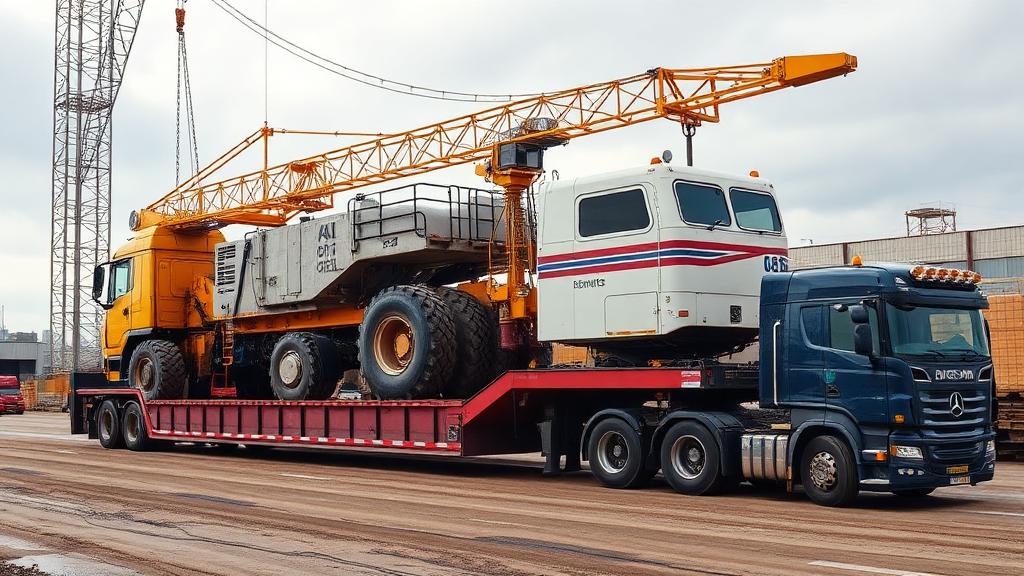
Construction trucks fail where pavement ends. Start with the same terrain honesty we use in winch-out and mud recovery, then add gate and load specifics.
Site Access: The First Question
If rebar mats or trench plates block angles, say so before dispatch routes a long wheelbase wrecker. For equipment moves beyond disabled trucks, read construction equipment hauling.
Send a gate photo with a tape measure reference when possible.
Related resources: Service options • Get a quote • Related guide
Equipment Class and Anchor Points
Loaded dumps change anchor math. When GCWR pushes heavy, book heavy-duty services up front.
Port-adjacent roll-offs at Redwood City Seaport need gate clearance—see our Redwood City Seaport commercial towing guide for TWIC and escort staging.
If the bed is raised, treat it as an overhead hazard until hydraulics are verified.
Related resources: Service options • Get a quote • Related guide
Coordination with GC and Safety
Superintendents should pause adjacent crane swings during recovery. For long-haul equipment repositioning, bookmark heavy equipment transport.
Keep a single radio net for spotters—mixed instructions cause injuries.
Confirm situation
Share your exact location, vehicle status, and destination details with dispatch.
Choose safe method
Request the towing method that matches your vehicle type and current condition.
Document service
Save invoices, timestamps, and photos for claims, compliance, or reimbursement.
Related resources: Service options • Get a quote • Related guide
Haul-Away vs On-Site Repair
If hydraulics can be field-repaired, weigh downtime vs tow cost with math, not ego.
Destination yards should confirm they accept muddy tires before dispatch.
Do This
- Share complete vehicle details
- Ask for itemized billing
- Confirm destination before loading
Avoid This
- Accepting unclear pricing
- Skipping method confirmation
- Leaving without records
Related resources: Service options • Get a quote • Related guide