San Mateo EV owners should confirm 12V health, tow mode, and garage clearance before any hookup. Start with our electric vehicle towing guide for Bay Area-wide context, then run this Peninsula checklist before you get a quote or call dispatch.
Why Flatbed-First on the Peninsula
Peninsula commutes are EV-dense—Tesla, Rivian, Hyundai IONIQ, Kia EV6, Ford Mach-E, and BMW iX are common on US-101 and CA-92. Even a simple 12V failure can brick shift-by-wire park locks, making drag towing risky.
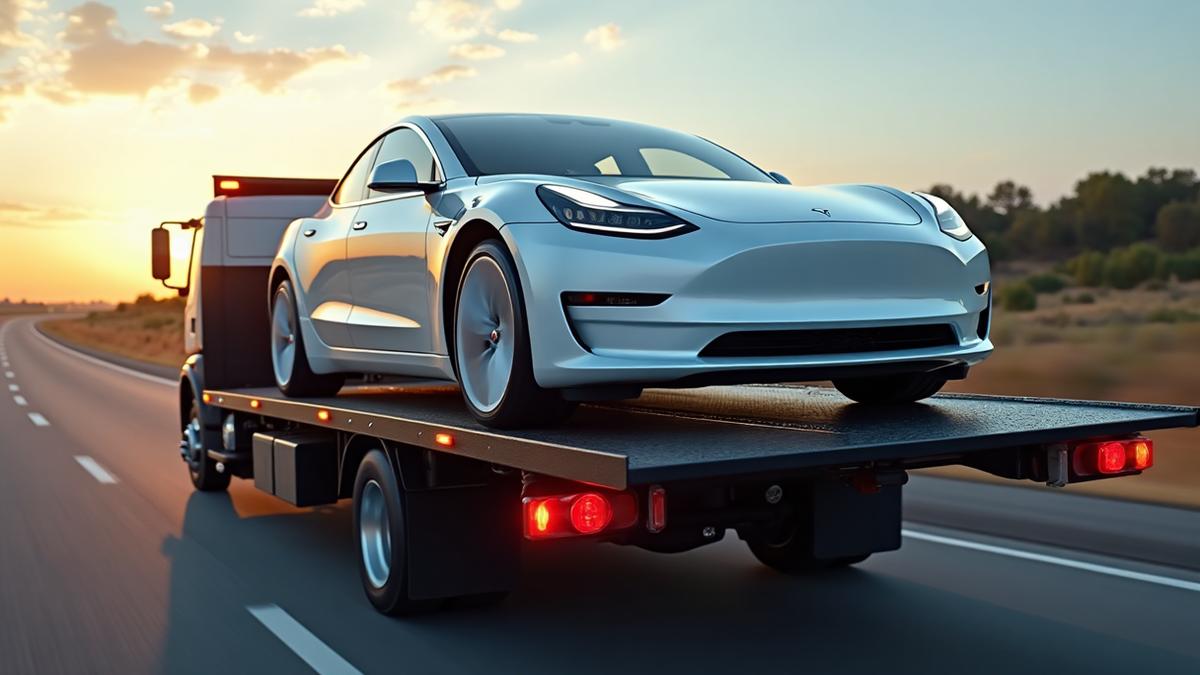
Manufacturer guidance for Tesla and Rivian is explicit: transport on a flatbed with all four wheels off the ground. Wheels turning while the drivetrain is energized can damage motors, inverters, and regenerative braking hardware.
Dense downtown garages and steep driveway lips make flatbed loading safer than wheel-lift even when the vehicle appears to roll. Say "electric vehicle—flatbed required" on the first call.
This San Mateo checklist complements—not replaces—our Bay Area electric vehicle towing guide and Tesla-specific towing guide.
Related resources: Service options • Get a quote • Related guide
12V vs High-Voltage Faults
The large traction battery powers driving; the 12V auxiliary battery runs computers, contactors, door handles, and parking brakes. Many owners confuse the two when the screen goes black.
Symptoms of a dead 12V: no response to key fob, frozen shifter, tow mode menu unavailable, random warning lights with plenty of main-pack charge showing.
Symptoms of traction pack depletion: drove until power limited, turtle mode, then shutdown—but accessories may still work briefly if 12V is healthy.
For jump-versus-flatbed decisions when only the 12V failed, see our EV dead 12V battery towing guide. When neutral cannot be confirmed, default flatbed.
Related resources: Service options • Get a quote • Related guide
Pre-Dispatch Checklist by Brand
Before calling, gather: make/model/year, whether tow or transport mode is available, 12V status, parking context (street, garage level, freeway shoulder), and destination shop hours.
Tesla: enable Transport Mode via touchscreen when powered; if 12V is dead, manual brake release may be required per owner's manual—tell the operator upfront.
Rivian R1T/R1S: use Park brake release or transport settings in Drive Modes before winch loading; Rivian's tow operator guide specifies flatbed-only and winch speed under 5 mph.
Hyundai/Kia/Ford/BMW: many lack a universal tow mode—flatbed is still the safe default. BMW may require dealer service mode for some models.
Dispatch script: "Electric [make/model], flatbed required, tow mode [on/off/unknown], 12V [alive/dead], location [address or mile marker], garage clearance [height if applicable]."
- Flatbed explicitly requested
- Tow mode status honest
- 12V vs main pack clarified
- AWD/dual-motor flagged
Diagnose 12V vs pack
Note whether accessories work, shifter responds, and tow mode menu is reachable—tell dispatch which system failed.
Enable tow mode
Tesla Transport Mode, Rivian park brake release, or brand equivalent; say if menu is unreachable.
Share garage context
Ceiling height, P-level, steep driveway, or freeway shoulder mile marker.
Confirm flatbed hookup
Decline wheel-lift; photograph strap points and receipt for insurance.
Related resources: Service options • Get a quote • Related guide
Peninsula Garage and Curb Constraints
Downtown San Mateo and Hillsdale area garages often post 6'8"–7'0" clearance—measure the lowest pipe or sprinkler head, not just the entrance sign.
Air suspension vehicles may need transport mode or lowest ride height before crossing ramp transitions. Rivian Conserve mode lowers ride height for loading.
Charging stalls are not repair bays—move to a legal loading zone before hookup when possible. Do not block Caltrain kiss-and-ride zones.
Steep driveway lips at older Peninsula homes can high-center—winch or skates may be needed before loading. Compare AWD flatbed rationale if the operator suggests dollies instead of a full flatbed.
Freeway breakdowns on 92 or 101 follow the same flatbed-first rule—see our CA-92 breakdown San Mateo guide for corridor staging.
Pre-tow checklist
- Flatbed requested
- Tow mode status known
- 12V vs HV clarified
- Garage height shared
Do not
- Wheel-lift on dual-motor EV
- Flat-tow behind RV
- Skip ramp measurement
Related resources: Service options • Get a quote • Related guide
Documentation and Shop Handoff
Photograph dash errors, state of charge, and any visible damage before hookup. Note if the vehicle was actively charging when it failed.
Ask the destination shop whether they are EV-certified for high-voltage diagnostics—not every general mechanic accepts live packs.
Keep the tow receipt showing flatbed method and strap points for insurance and warranty threads.
Fleet and commuter cards: request itemized invoices listing flatbed service for reimbursement.
Need pricing before you commit? Get a quote with make, model, and pickup ZIP—Peninsula hub 650-881-2400 for live dispatch.
Related resources: Service options • Get a quote • Related guide
Peninsula Garage Constraints
Downtown San Mateo Transit Center underground and Hillsdale garages often post 6'8"–7'0" clearance—measure the lowest pipe, not just the entrance sign.
Air suspension and Rivian Conserve/lowest ride height settings help cross ramp transitions without scraping.
Charging stalls are not repair bays—move to a legal loading zone before hookup when possible.
Tell dispatch if the vehicle is near Caltrain kiss-and-ride—see our Caltrain San Mateo tow pickup guide for pedestrian staging.
- Tow mode enabled or manual neutral confirmed
- 12V jump attempted only if manual allows
- Ramp photo if clearance is tight
- Flatbed requested on first call
Related resources: Service options • Get a quote • Related guide