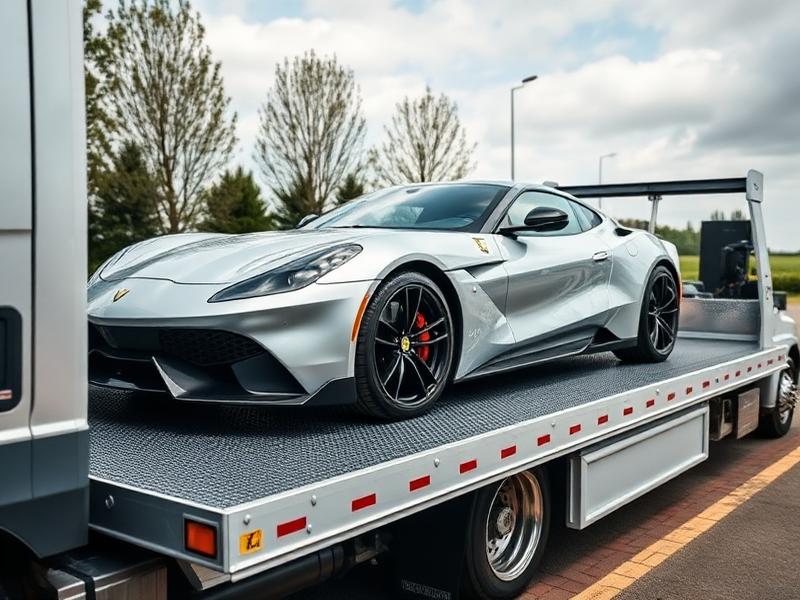
Modified cars often fail during transport because standard methods do not account for low clearance, fragile aero parts, and custom geometry.
Why Modified Cars Are High Risk
Lowered suspensions and body kits reduce margin for loading error. Minor mistakes can crack splitters, side skirts, or diffuser sections.
Owners should treat towing as a precision process, not a generic pickup.
Related resources: Service options • Get a quote • Related blog
Low-Angle Loading Techniques
Low-angle or extended ramp setups reduce scrape risk at entry breakover points.
Controlled winch loading is often safer than abrupt throttle movement for very low vehicles.
- Confirm approach angle
- Use gradual loading
- Avoid sudden stop/start movement
- Check clearance throughout
Related resources: Service options • Get a quote • Related blog
Safe Tie-Down Practices
Tie-down strategy should avoid body-contact points and preserve wheel/paint integrity.
Before transport starts, visually verify strap position and tension symmetry.
Confirm situation
Share your exact location, vehicle status, and destination details with dispatch.
Choose safe method
Request the towing method that matches your vehicle type and current condition.
Document service
Save invoices, timestamps, and photos for claims, compliance, or reimbursement.
Related resources: Service options • Get a quote • Related blog
Owner Checklist Before Pickup
Share your mod list, ride height, and any known fragile parts during dispatch. Take photos before loading.
At delivery, re-check key surfaces and request immediate notation for any concerns.
Do This
- Share complete vehicle details
- Ask for itemized billing
- Confirm destination before loading
Avoid This
- Accepting unclear pricing
- Skipping method confirmation
- Leaving without records
Related resources: Service options • Get a quote • Related blog